
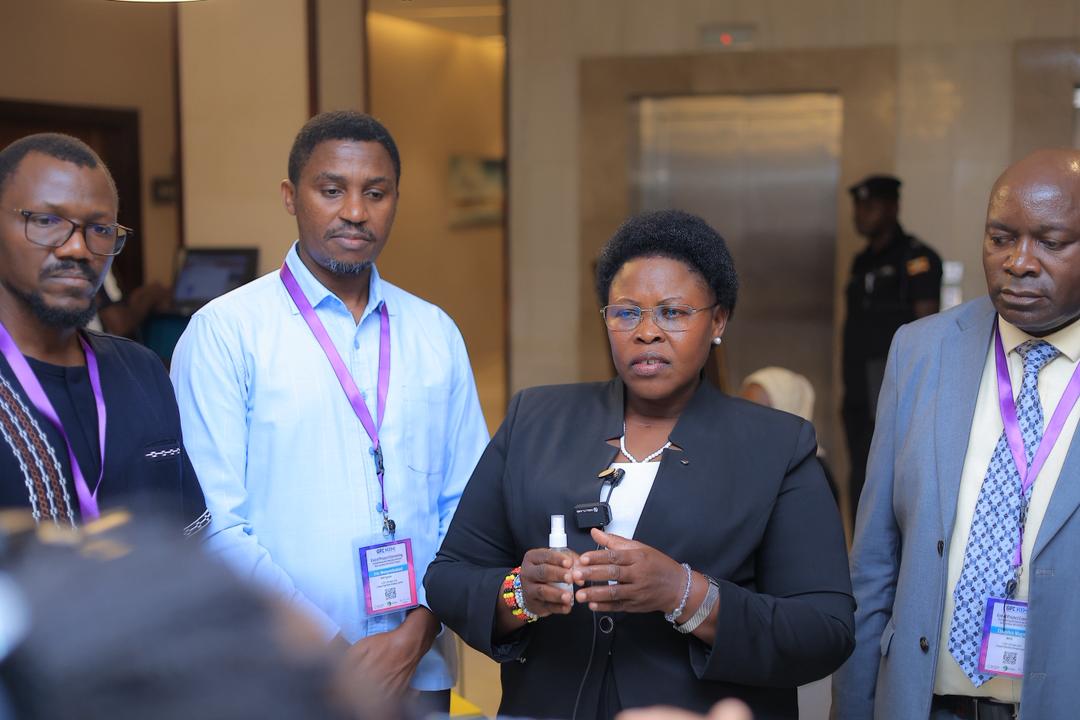
Kampala -Uganda: A high-level regional forum brought together policymakers, researchers, development partners, and education stakeholders from across Africa and beyond, including Uganda, Kenya, Senegal, Burkina Faso, Rwanda, and Tanzania.
The discussions centered on a shared vision: building stronger education data systems to support evidence-based decision-making and improve learning outcomes across Africa.
“We are entering an era where decisions can no longer be based on assumptions—they must be guided by reliable, timely, and actionable data.” — Dr Joyce Moriku Kaducu
Minister of State for Primary Education
For many years, education data in many systems was collected but not fully owned or utilized by schools and districts. Decisions were often made based on incomplete or externally driven narratives.
This project is changing that reality.
Through strengthened education data systems, schools and districts are now able to own, interpret, and use their own data for planning and improvement.
“Until the lion learns to write, every story will glorify the hunter.”
This African proverb reflects a powerful shift—from externally defined narratives to locally owned evidence systems.
Across participating countries, schools are now actively using data to identify challenges, allocate resources, and improve service delivery.
This marks a transition from data collection for reporting to data use for decision-making and impact.
“Data is no longer just collected—it is now driving decisions at school and district level.” Said — Dr Joyce Moriku Kaducu,Minister of State for Primary Education
This shift is strengthening accountability, improving planning, and enhancing education service delivery.
In today’s fast-changing world, education systems face increasing pressure to deliver better outcomes with limited resources.
Stakeholders including Daniel Mwanga a senior data scientist and researcher at the African Population and Health Research Center (APHRC) emphasized that:
“Decisions can no longer rely on guesswork. They must be driven by reliable and actionable data.”
Education data systems are now recognized as strategic assets, enabling governments to improve planning, resource allocation, and service delivery.
The success of this initiative is built on strong partnerships between governments, research institutions, and development partners such as IDRC and the African Population and Health Research Centre.
“Strong data systems are built through collaboration, not isolation.”
Field experiences, including visits to districts such as Gulu, have shown how collaboration improves planning and decision-making at grassroots level.
A central focus of the project has been improving gender equity and inclusion in education data systems, ensuring that every learner is represented in decision-making processes.
“No child should be left behind—and that begins with ensuring every decision is based on evidence.”
The initiative is also exploring how artificial intelligence (AI) can enhance education data systems by generating deeper insights for planning and decision-making.
“AI allows us to move beyond surface-level analysis and unlock deeper insights from education data.”
These innovations are being aligned with national systems to ensure long-term sustainability and relevance.
A key priority of the project is sustainability—ensuring that innovations are fully integrated into national systems and continue beyond project timelines.
“The goal is not just to implement projects, but to build systems that last.”
This includes strengthening capacity, improving infrastructure, and aligning innovations with national education priorities.
As the forum concluded, stakeholders reaffirmed their commitment to building stronger, more inclusive, and data-driven education systems across the continent.
“We must move from collecting stories about schools to enabling schools to tell their own stories through data.”
This shared vision places learners at the center of education reform and ensures that every child is counted, supported, and empowered.
This regional initiative demonstrates that strong education data systems are essential for improving learning outcomes and achieving equity in education.
While progress has been made, continued investment in systems, capacity, and innovation is essential to sustain and scale these gains across Africa.