By Martin Akena
KAMPALA, Uganda – It started as a whisper. A theory. An idea that Determined — a woman once dismissed by many — refused to let fade away.
Today, that whisper has grown into a movement.
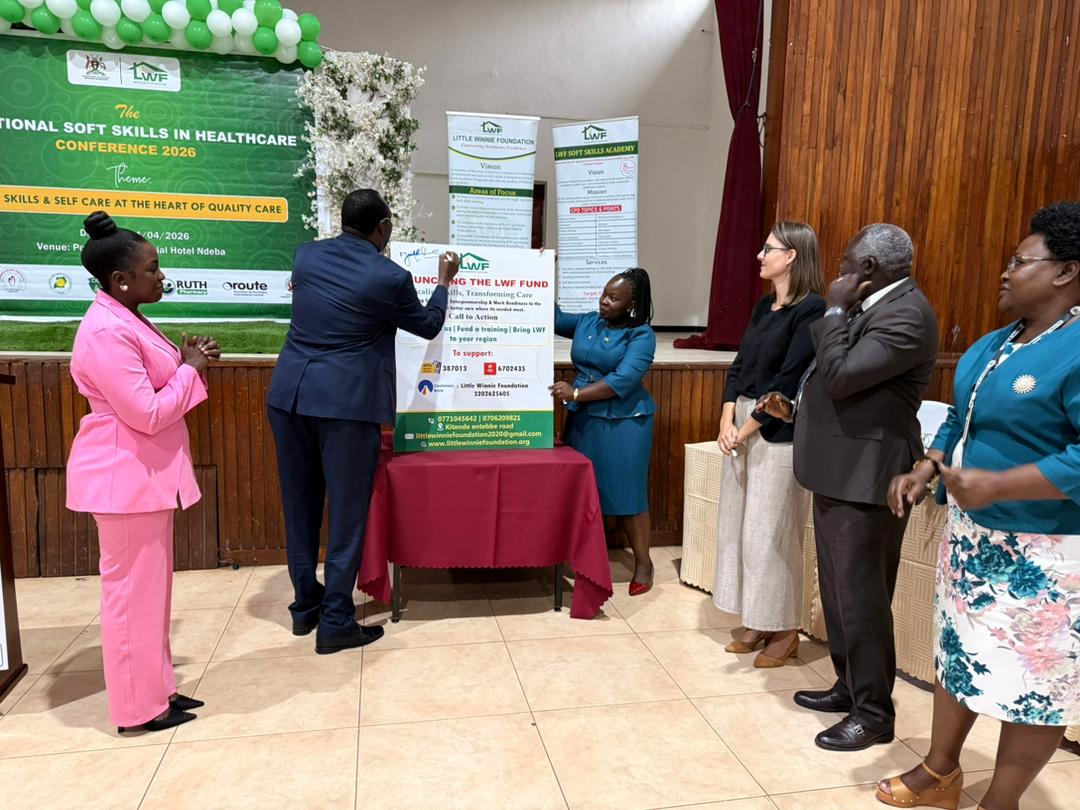
The day’s theme—“skin, self-care, and the hand of penalty”—may have raised a smile, but the sentiment behind it was deeply serious. For too long, Uganda’s healthcare conversations have focused on hardware: ambulances, X-ray machines, medicine supplies, and infrastructure. Then, a bold question from the Determined Foundation shifted the narrative.
That question, a Ministry official recalled, “hit the nail on the head.” It revealed a stark truth: technical excellence without empathy is simply well-assembled equipment. Data from last year’s inaugural conference confirmed it.
More than 70% of health workers reported feeling unprepared to manage emotional fatigue and ethical dilemmas.
Amid the gleam of MRIs and the pressure of endless queues, something intangible—yet vitally important—was missing. The conference set out to define it.
Delegates learned that quality of care isn’t solely about evidence-based medicine. It’s rooted in awareness, empathy, and action—a clinician who listens even when exhausted, and a system that supports the person behind the white coat.
“A clinician who is physically exhausted, emotionally drained, or spiritually broken cannot deliver quality care,” the official stressed. “No matter how many years spent in medical school, if you are broken yourself, you cannot deliver the level of service your patients need.”
But the conference was not only a diagnosis—it was a declaration.
Following the 2025 conference, the Ministry made a series of unprecedented commitments:
The conference drew a crucial distinction: soft skills aren’t about simply being “nice”—they are the operational engine of a functional healthcare system.
“Perceptions of quality are shaped by communication and trust,” the Ministry official noted. “Soft skills drive service uptake, continuity of care, and improved health outcomes.”
“We can build the most modern hospitals,” the official concluded, “but if a patient encounters a burnt-out, unsupported, and exhausted clinician, we have failed.”
As the conference approached its final declaration, one truth stands clear: in the race for universal health coverage, Uganda is betting on the hardest soft skill of all—caring for the caregiver.