By Martin Akena
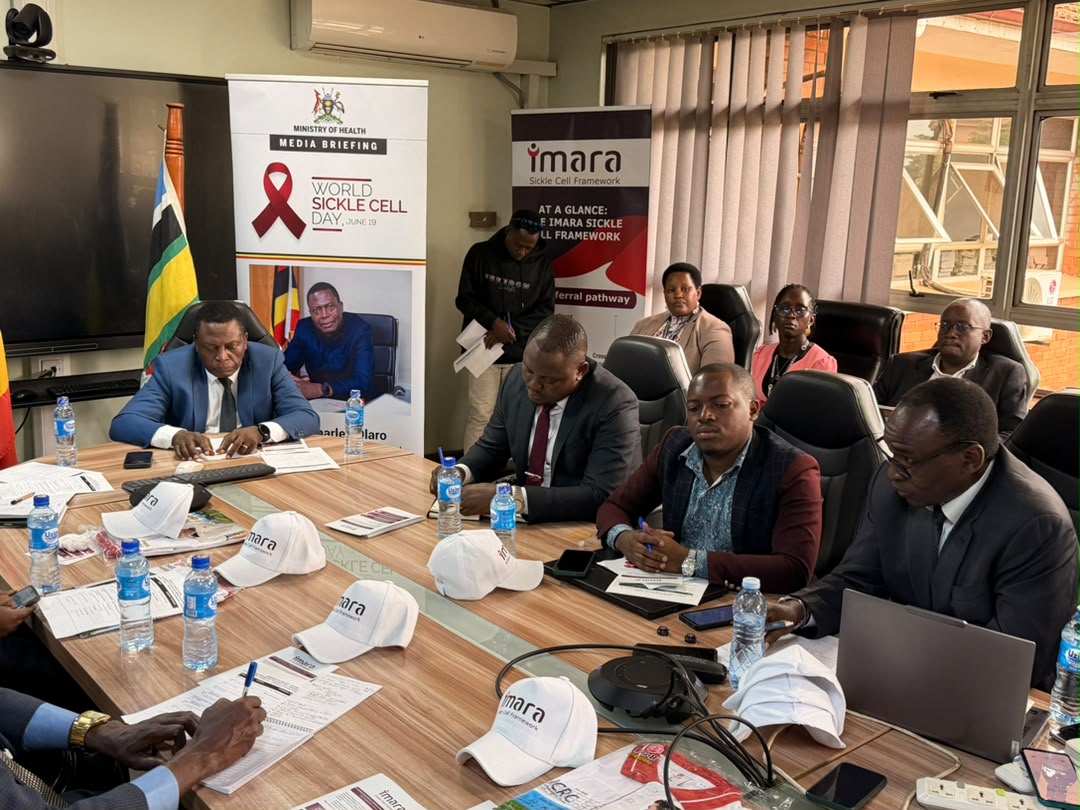
Uganda will on June 19, 2026, join the rest of the world to mark World Sickle Cell Day, with this year’s national commemoration set to take place in Jinja City as the Ministry of Health intensifies efforts to confront one of the country’s most persistent inherited health challenges.
Ahead of the event, the Director General of Health Services has called for a stronger and more coordinated national response, describing sickle cell disease as a major public health concern that continues to affect thousands of families across the country.
Sickle cell disease remains the most common inherited blood disorder in Uganda, with an estimated 13 to 15 percent of the population, representing nearly six million Ugandans, carrying the sickle cell trait. Health experts warn that this places Uganda among the countries with the highest burden globally.
Ministry of Health records indicate that approximately 20,000 babies are born with the disease every year. Of these, between 6,000 and 9,000 die before reaching their fifth birthday, contributing significantly to the country’s under-five mortality rate.
Officials say one of the biggest challenges remains delayed diagnosis, with many children succumbing to complications before their condition is identified. This, according to health authorities, continues to place a heavy burden on families and communities.
The Ministry says many of these deaths can be prevented through timely screening, access to treatment, and continuous care.
Recent interventions in districts such as Kayunga have demonstrated the value of early diagnosis and proper treatment. Health officials cite the case of a 52-year-old woman living with sickle cell disease as evidence that, with the right medical support and management, people with the condition can live long and productive lives.
The Busoga sub-region, which will host this year’s commemoration, was selected because of its high prevalence of sickle cell disease and trait. Health authorities say the event will serve as an opportunity to renew national awareness and strengthen community engagement in prevention and care.
The Ministry has urged leaders at all levels, including Members of Parliament, district officials, religious leaders, and development partners, to support expanded public education, premarital screening, and genetic counselling as part of wider efforts to reduce new cases.
Government is also moving to strengthen newborn screening by transitioning from targeted testing sites to a nationwide programme, supported by locally manufactured test kits and point-of-care machines already being rolled out in health facilities.
Health facilities across the country are being encouraged to integrate sickle cell care into their chronic care clinics to improve follow-up, treatment, and long-term management.
The Ministry has also highlighted the impact of Hydroxyurea, a medicine that has significantly reduced complications among children living with sickle cell disease in areas where it has been introduced. Officials say expanding access to the medicine remains a priority.
Beyond treatment, families have been encouraged to adopt practical home-based care measures such as malaria prevention, adequate hydration, infection control, and early medical consultation whenever complications arise.
The Ministry of Health has reaffirmed its commitment to ensuring that children born with sickle cell disease are identified early and linked to quality healthcare services.
As Uganda marks World Sickle Cell Day, the focus remains on strengthening awareness, improving access to care, and reducing preventable deaths. Health officials say the country has the knowledge, the tools, and the capacity to make significant progress, provided all stakeholders remain committed to the cause.
The national commemoration in Jinja is expected to bring together health workers, policymakers, development partners, patient advocates, and communities in a united effort to advance the fight against sickle cell disease in Uganda.