
The Ministry of Health has commended a new cohort of Ugandan health workers trained in diagnostic ultrasound for strengthening access to lifesaving maternal and newborn healthcare services in underserved communities across Busoga and Rwenzori sub-regions.
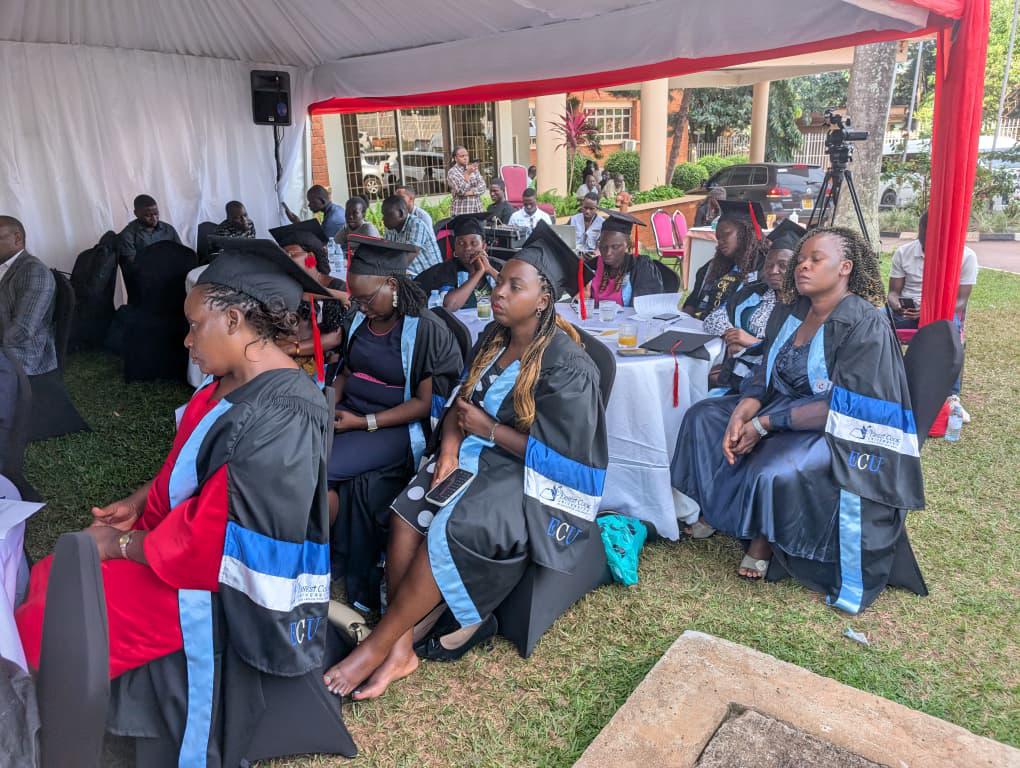
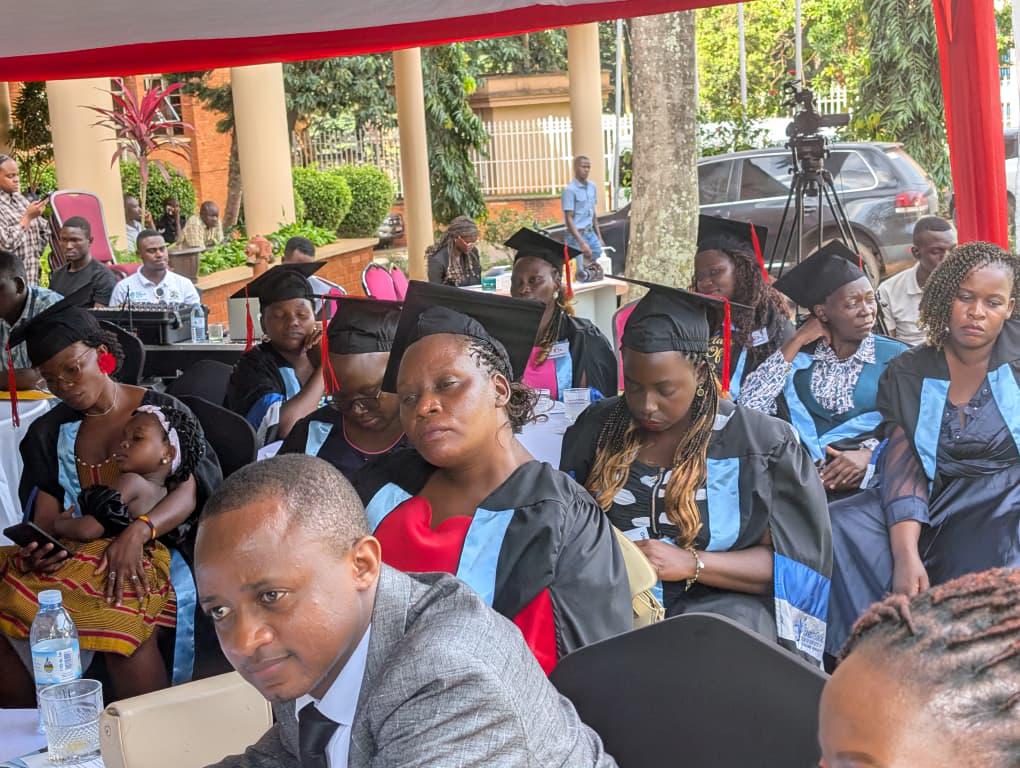
The remarks were made during the graduation ceremony of ten health workers who completed a one-year Diploma in Diagnostic Ultrasound (Sonography) training programme at the Ernest Cook Ultrasound Research and Education Institute (ECUREI).
The graduates, mainly midwives and nurses drawn from Health Centre IVs and General Hospitals, were trained under the WeCare Project, a maternal and neonatal health initiative implemented by Enabel, the Belgian Agency for International Cooperation, in partnership with the Ministry of Health.
Speaking during the ceremony, the Director General of Health Services at the Ministry of Health, Dr Charles Olaro, described the programme as timely and highly relevant in addressing Uganda’s maternal and newborn healthcare challenges.
Dr Olaro commended Ernest Cook University and ECUREI for focusing on specialised healthcare training programmes that directly respond to national healthcare priorities.
“What particularly impresses me about Ernest Cook University is its deliberate focus on programmes that directly address the country’s most pressing healthcare needs and have the potential to transform lives,” Dr Olaro said.
He emphasised the critical role of diagnostic ultrasound in improving maternal healthcare outcomes, noting that every expectant mother should have access to at least one quality ultrasound examination during pregnancy.
“As government and partners, we must continue strengthening both the availability of equipment and the human resource capacity required to deliver quality diagnostic services across the country,” he added.
Dr Olaro further applauded the approach of training health workers who are already serving within the public healthcare system, noting that it strengthens service delivery at community level while building sustainable institutional capacity.
The Director General also encouraged the graduates to uphold professionalism, integrity and patient-centred care in their work, while continuously upgrading their knowledge and skills in response to evolving medical technologies and healthcare needs.
He further highlighted the importance of proper documentation, infection prevention and control, and ethical conduct within healthcare practice.
The newly trained sonographers have already started transforming healthcare delivery within their respective districts.
According to records presented during the ceremony, the graduates collectively conducted 10,323 ultrasound scans within just five months after returning to their duty stations across 14 supported health facilities in Busoga and Rwenzori.
The scans were provided free of charge to mothers who would otherwise have travelled long distances or incurred high costs in private facilities to access ultrasound services.
Health experts note that routine obstetric ultrasound is critical in confirming pregnancy viability, determining gestational age, monitoring foetal growth and identifying pregnancy-related complications that require timely medical intervention.
The programme has significantly reduced barriers to maternal healthcare access, particularly among women in rural and hard-to-reach communities.
Among the facilities that registered high service volumes were Rukoki General Hospital, Komuli General Hospital, Buwenge General Hospital, Bukuuku Health Centre IV and Nankandulo Health Centre IV.
The graduates also reported expanding diagnostic services beyond obstetric care to include gynaecological, abdominal and small-parts scans, further increasing access to specialised healthcare services within public health facilities.
Speaking on behalf of the graduates, Ms Marion Kainza, the students’ representative, expressed gratitude to the Ministry of Health, Enabel, the Embassy of the Kingdom of Belgium, trainers and partners for supporting the initiative.
She noted that the programme had equipped health workers with critical skills that are already improving maternal healthcare services within communities.
“Within just five months of deployment, the sonographers trained under this programme have conducted over 10,323 free ultrasound scans for mothers across different health facilities. These are services that would otherwise have remained inaccessible or unaffordable for many women, especially in rural communities,” she said.
Ms Kainza also highlighted challenges faced by healthcare workers, including staffing gaps, limited supplies of ultrasound consumables and the need for improved welfare, career progression and continuous professional development opportunities for specialised cadres.
The Enabel Country Director described the initiative as part of a broader partnership between Uganda and Belgium aimed at strengthening maternal and newborn healthcare systems through improved quality of care, emergency referral systems, district leadership and community engagement.
The Director commended the graduates for dedicating a full year to acquiring specialised skills while remaining committed to serving within Uganda’s public healthcare system.
District Local Governments from Busoga and Rwenzori were also recognised for supporting the programme by allowing health workers to undertake the year-long training while maintaining their salaries and positions.
All trainees signed commitment agreements and were bonded to continue serving within public health facilities to ensure retention of specialised skills in the healthcare system.
The Ministry of Health reaffirmed its commitment to working with development partners, training institutions and local governments to strengthen healthcare workforce capacity and improve maternal and newborn health outcomes across the country.