

Uganda’s journey to hosting the 2027 Africa Cup of Nations (AFCON) is now entering a decisive phase, as Kampala hosts a key Confederation of African Football (CAF) kickoff workshop this week. More than a routine meeting, the gathering signals the transition from winning the bid to delivering a tournament that will place East Africa firmly on the continental football map.
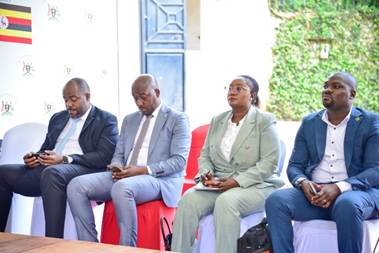
The workshop, hosted at Mestil Hotel in Kampala, brings together CAF officials, government representatives, and football administrators from Uganda, Kenya, and Tanzania. It marks the formal start of coordinated planning across the three host nations under the now well-known PAMOJA partnership—pamoja meaning “together” in Kiswahili.
Discussions are expected to go beyond fixtures and venues, focusing on critical areas such as security, infrastructure, finance, media operations, ticketing, and commercial strategy. The goal is clear: align all stakeholders around a unified roadmap to deliver a world-class tournament in 2027.
Uganda’s place at the AFCON table did not come easily. The journey began when Uganda, Kenya, and Tanzania chose collaboration over competition, submitting a joint bid that positioned East Africa as a single, ambitious football bloc. Competing against established bidders such as Algeria, Botswana, and Egypt, the PAMOJA bid had to demonstrate not only technical readiness but also strong political will and regional coordination.
A turning point came when the bid evolved from a football federation initiative into a fully backed government project. In Uganda, the proposal was formally presented to President Yoweri Museveni at State House Entebbe in May 2023, underscoring the country’s commitment to leveraging AFCON as a platform for tourism, investment, and international visibility.
This political backing proved crucial. Like its co-hosts, Uganda was bidding as much on future potential as on existing infrastructure. Proposed facilities included Mandela National Stadium, St. Mary’s Stadium, and Nakivubo Stadium, alongside planned developments such as Hoima City Stadium and Akii-Bua Stadium. Training grounds, hotels, and airport upgrades were also part of the broader package.
As FUFA President Moses Magogo noted at the time, major tournament bids are judged not only on existing facilities but on credible plans for delivery. CAF ultimately bought into that vision.
On 27 September 2023, CAF officially awarded the 2027 AFCON tournament to Uganda, Kenya, and Tanzania during an Executive Committee meeting in Cairo. The decision was historic: it marked the first time the tournament would be hosted by three countries and returned AFCON to the wider East African region for the first time since Ethiopia hosted in 1976.
Since then, the focus has shifted from celebration to scrutiny. CAF has conducted multiple technical inspections across the three countries, assessing stadiums, training facilities, and supporting infrastructure against strict international standards. In Uganda, venues such as Mandela National Stadium and the proposed Hoima City Stadium remain central to these evaluations.
The Kampala workshop therefore comes at a critical moment. According to the Local Organising Committee’s subcommittee on communications and signage, the meeting is not merely an inspection visit but a strategic planning session to refine the next phase of implementation.
Dr Denis K. Mugimba, chairperson of the subcommittee, noted that the meeting will highlight broader economic opportunities linked to AFCON 2027. Stakeholders in hospitality, tourism, transport, and retail are being encouraged to prepare for increased demand, with institutions such as the Uganda Tourism Board guiding standards and certification. The tournament is expected to stimulate growth in accommodation, cultural tourism, fan engagement, ICT services, and financial sectors.
Financing has emerged as a clear indicator of Uganda’s commitment. Government has already released funds for eight designated training facilities, including Hoima Boma Grounds, Masindi Municipal Stadium, and venues at Kyambogo University and Makerere University. In addition, Parliament has approved approximately Shs905 billion in the 2026/27 budget to support wider preparations, covering road networks, airport upgrades, health facilities, stadium renovations, and operational costs.
AFCON 2027 is, therefore, more than a football tournament. It represents a strategic opportunity to accelerate infrastructure development, boost tourism, and strengthen regional integration within East Africa.
As the Kampala workshop gets underway, the message is unmistakable: Uganda and its partners have already won the right to host. What remains is the far more demanding task of delivering on that promise and ensuring that AFCON 2027 becomes a lasting legacy for the region.